


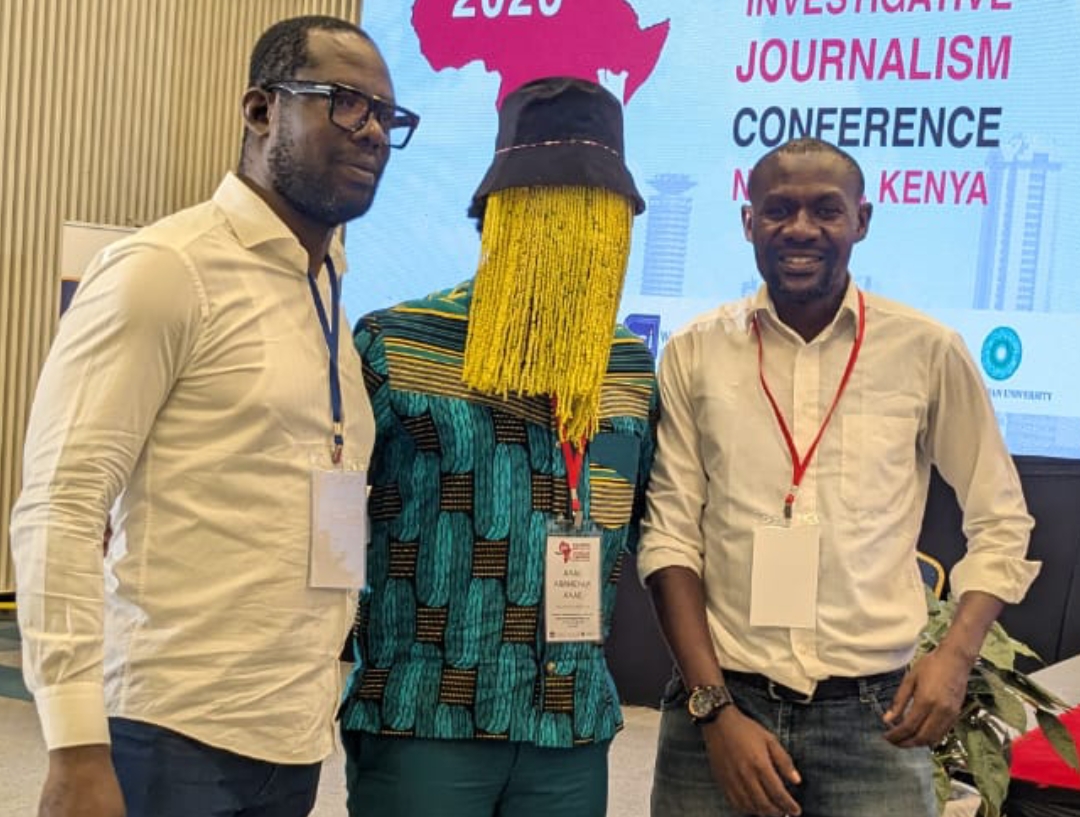
Investigating the consequences of armed conflict, documenting environmental damage and gathering communities’ accounts in a region where access to certain areas remains difficult. These are some of the realities of journalism in eastern Democratic Republic of the Congo (DRC) that Janvier BARHAHIGA, an environmental journalist and editor of BKINFOS.CD, wants to bring to the attention of fellow African journalists gathered in Nairobi, Kenya.
Redaction
He is attending the 22nd African Investigative Journalism Conference (AIJC), taking place from November 10 to 12, 2026. The conference brings together media professionals to discuss investigative reporting, editorial independence, emerging technologies and journalists’ safety.
Originally from Bukavu, in South Kivu province, Janvier BARHAHIGA works in an environment marked by armed conflict, population displacement and growing pressure on natural resources. For him, attending the conference is an opportunity to explain the constraints faced by journalists working in unstable environments, while also highlighting the possibilities for investigations rooted in local realities.
“I am pleased to take part in this conference, which offers an opportunity to discover other dimensions of journalism, learn new methods and share experiences gained in the field,” he says.
Investigating when access to the field becomes difficult
In eastern DRC, investigative journalism involves more than finding information and identifying sources. Armed clashes, insecurity along roads, restricted access to certain communities and communication difficulties can all complicate data collection and verification.
For journalists covering environmental issues, these constraints are particularly significant. Some forest and mining areas become difficult, or even impossible, to reach when security conditions deteriorate.
This makes it harder to directly verify extractive activities, assess environmental damage and monitor the consequences for communities living near affected areas.
Journalists must therefore diversify their methods: cross-checking testimonies, consulting available documents, working with local researchers and using geographic or satellite data, while carefully considering the limitations of each source.
For Janvier BARHAHIGA, these realities deserve greater attention in discussions about the future of investigative journalism in Africa. Methods used in relatively accessible environments cannot always be applied in the same way in regions affected by armed conflict.
Challenges that can also create new investigative opportunities
Despite these difficulties, working in a conflict zone can encourage journalists to develop new reporting approaches.
Community testimonies, local researchers’ knowledge, satellite imagery, mapping tools and digital archives can help document developments that journalists cannot always observe directly in the field.
In environmental reporting, these methods can help monitor changes in forest cover, identify shifts in land use and examine the consequences of certain mining activities.
However, these tools do not replace verification. Satellite imagery may reveal a change in forest cover, but it cannot, on its own, establish who is responsible for the degradation or the circumstances in which it occurred. Cross-checking with testimonies, documents and scientific expertise remains essential.
Artificial intelligence and other emerging technologies, also among the topics discussed at AIJC, offer additional possibilities for journalists working in difficult environments. Their use, however, requires caution to preserve the accuracy and reliability of information.
Bringing communities into investigative reporting
Beyond technology, Janvier BARHAHIGA emphasizes the importance of local knowledge in investigative journalism.
In conflict-affected regions, communities often hold valuable information about environmental changes, population movements and economic activities that continue despite insecurity.
Their contributions can complement official information and analyses produced remotely. However, gathering these accounts requires particular attention to source protection, especially when interviewees may face security risks.
Through BKINFOS.CD, the journalist reports on the links between the environment, conflict and the living conditions of communities in eastern DRC.
His participation in Nairobi is an opportunity to share professional experience gained in this challenging context and exchange ideas with other journalists on methods for continuing investigations despite security constraints.
Bringing local experience into a wider African debate
The 22nd African Investigative Journalism Conference provides a platform for discussing changes in the profession and the conditions needed to sustain independent journalism.
For journalists working in conflict zones, these discussions raise practical questions: How can sources be protected? How can information be verified when access to the field is impossible? How can investigations continue when journalists and communities face insecurity? And how can local realities reach audiences beyond national borders?
Janvier BARHAHIGA believes that experience from eastern DRC can contribute to these discussions, particularly on investigative methods suited to fragile and conflict-affected environments.
Running until November 12, 2026, in Nairobi, AIJC brings together journalists from several African countries and other parts of the world. This first participation by the editor of BKINFOS.CD offers an opportunity to highlight the challenges of conflict-zone journalism, as well as the practices and investigative opportunities developed by media professionals who continue to document these realities.