


By JJoëlle KUJIRABWINJA
A pot of hot water, medicinal plants, a mortar and the hands of traditional birth attendants: among the Wambuti Indigenous Peoples living around Kahuzi-Biega National Park (KBNP), these practices remain an important part of maternal care and are passed down from one generation to the next.
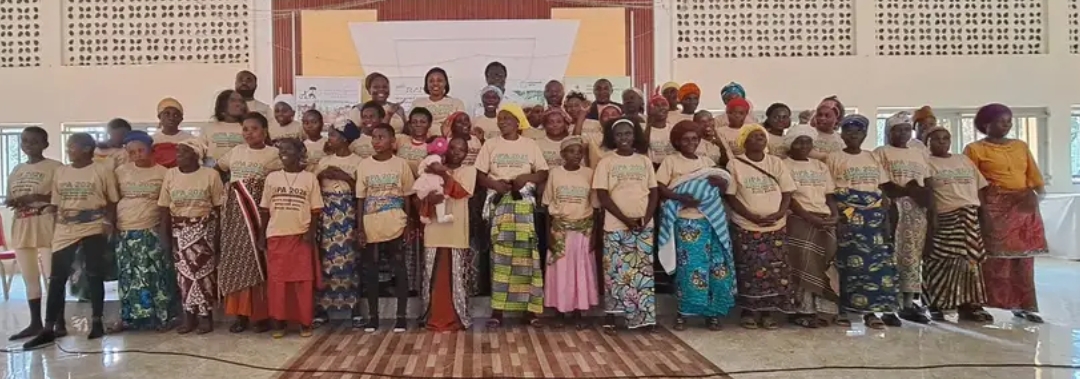
On August 9, more than 100 representatives of Wambuti communities from Kalehe, Kabare and Idjwi gathered in Miti to discuss challenges affecting maternal health among Indigenous communities.
The meeting, held as part of the 2026 International Day of the World’s Indigenous Peoples, focused on the theme: “Challenges related to maternity among the Wambuti Indigenous Peoples.”
Traditional birth attendants, community representatives and health professionals exchanged experiences about traditional maternity practices, the use of medicinal plants and the challenges faced by women during pregnancy and childbirth.
Traditional knowledge passed down through generations
During the discussions, traditional birth attendants described practices used in their communities to support pregnant women and mothers.
Much of this knowledge is transmitted orally, often from older women to younger generations. Medicinal plants and traditional techniques remain part of the health practices used by some Wambuti families.
For participants, these practices represent an important part of Wambuti cultural heritage. At the same time, they acknowledged the need to address potential health risks associated with some traditional treatments.
Finding a balance between tradition and modern healthcare
Participants highlighted concerns including the dosage of medicinal plants, the quality of products used and access to appropriate equipment.
The discussions underscored a broader challenge facing Indigenous communities: how to preserve traditional knowledge while ensuring safer maternal and newborn care.
Participants called for greater training and support for Indigenous women involved in traditional maternity care.
Rather than simply replacing traditional practices, they argued that dialogue between traditional birth attendants and health professionals could help identify practices that can be safely maintained while improving referral systems for women experiencing complications.
Maternal health in communities around KBNP
For communities living around Kahuzi-Biega National Park, access to health services can be affected by geographical, economic and security challenges.
Participants said improving maternal health therefore requires approaches that take local culture and community knowledge into account.
Training traditional birth attendants could also strengthen their ability to recognize danger signs and encourage timely referral of pregnant women to health facilities when complications arise.
Protecting knowledge while addressing health risks
The meeting in Miti highlighted a wider issue: protecting Wambuti cultural heritage should go hand in hand with improving access to safe and quality healthcare.
Recognizing traditional knowledge does not necessarily mean using every traditional practice without safeguards. Instead, participants called for stronger collaboration between traditional knowledge holders, health professionals and Indigenous communities.
For the Wambuti representatives who attended the meeting, placing Indigenous women at the center of discussions about maternity is an important step toward developing health responses that are both culturally relevant and medically safer.
The event was supported by KfW, RAPY, UEA, CPAKI, AAP and PEx.